Over / Under Explained
The Over / Under market is one of the most common football betting markets in the UK.
Unlike match result markets, Over / Under betting focuses on the total number of goals scored, regardless of which team wins the match.
This guide explains how Over / Under betting works, how goal lines are set, and how this market behaves — without tips or recommendations.
What does Over / Under mean?
Over / Under betting is based on whether the total number of goals scored in a match is:
over a specified line
under a specified line
The most common line in football is 2.5 goals.
Why 2.5 goals is common
Football matches cannot end with half goals.
Using a .5 goal line ensures there are only two possible outcomes:
Over Under
This avoids draws and simplifies settlement.
Example of an Over / Under market
A typical Over / Under 2.5 goals market might look like this:
Over 2.5 goals → 1.95
Under 2.5 goals → 1.85
If the match ends:
3 goals or more → Over wins
2 goals or fewer → Under wins
Other common goal lines
Bookmakers may offer different goal lines, such as:
Over / Under 0.5
Over / Under 1.5
Over / Under 3.5
In general:
lower lines → higher probability, lower odds
higher lines → lower probability, higher odds
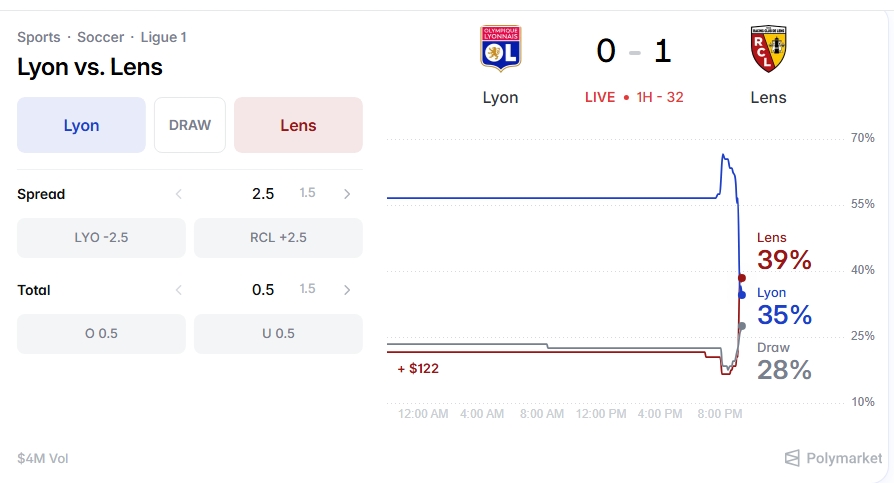
Over / Under vs match result
Over / Under markets:
focus on goals, not outcomes
are independent of which team wins
can behave very differently from 1X2 markets
A match can finish 0–0, 2–1 or 3–3, regardless of which team is the favourite.
Key Takeaways
Over / Under betting is a simple concept with complex behaviour.
Understanding how goal lines work helps clarify:
how markets are priced
why outcomes can surprise
how probability and variance interact
For related guides, continue with:
Both Teams To Score Explained
1X2 Explained
Probability vs Odds